
Case Studies
Custom Playing Cards for Canada: A 10,000-Deck Split Shipping Case Study
See how a 10,000-deck custom playing card order for Canada combined air and sea freight, with 3,060 decks by air and 6,940 by sea under DDP arrangements.
Ordering custom playing cards for Canada involves more than approving the artwork. For a bulk order, the delivery plan also affects when stock becomes available and how much of the budget goes toward freight.
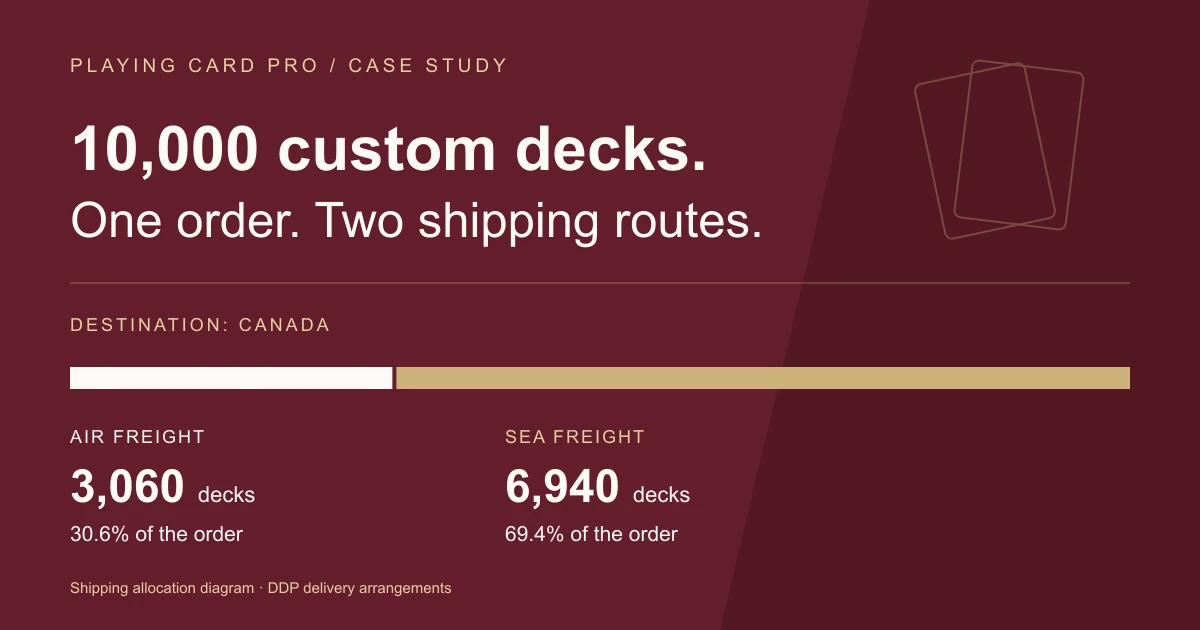
In this 10,000-deck project, the customer needed part of the order earlier while keeping the remaining shipment more economical. The agreed plan divided the order between air and sea freight: 3,060 decks by air and 6,940 decks by sea, with DDP delivery arrangements. Here is how the quantities, delivery responsibilities and communication were coordinated.
The project at a glance
- Product: custom printed playing cards.
- Order quantity: 10,000 decks.
- Destination: Canada.
- Air shipment: 3,060 decks, or 30.6% of the order.
- Sea shipment: 6,940 decks, or 69.4% of the order.
- Delivery arrangement: DDP, with the destination and scope agreed for the order.
The two shipments formed one production order. The split addressed different inventory needs; it did not change the customer’s total deck quantity.
The challenge: earlier stock without sending everything by air
Sending all 10,000 decks by air would have prioritized speed but increased freight expenditure. Sending the entire order by sea would have kept more of the shipment on the lower-cost route, but the customer would have had to wait longer for the first stock.
A split shipment offered a practical middle ground. The first question was not simply which transport mode was fastest. It was how many decks the customer needed before the main shipment could arrive.
That distinction is useful for buyers planning a retail launch, branded promotion or replenishment order. The first allocation should reflect the actual early requirement, with the balance planned around later demand.
The solution: 3,060 decks by air, 6,940 by sea
Air freight for the first allocation
The air allocation contained 3,060 decks. Its purpose was to make an initial portion of the order available earlier, without applying air freight costs to every deck.
This allocation represented 30.6% of the order. The quantity was specific to this project; it is not a standard minimum or a recommended ratio for every custom playing card order.
Sea freight for the remaining decks
The remaining 6,940 decks, or 69.4%, were allocated to sea freight. The forwarder arranged a faster vessel option for this portion, and the team communicated schedule information as it became available.
Vessel selection still needs to be considered alongside port handling, customs clearance, warehouse processing and final delivery. A vessel schedule alone should not be treated as a guaranteed arrival date at the customer’s premises.
For this project, the central decision was the allocation between the two routes. No fixed delivery-time guarantee or measured freight saving is stated in this case study.
How DDP delivery was coordinated
The order used DDP (Delivered Duty Paid) arrangements. Under DDP, the seller is responsible for arranging delivery to the agreed destination, including import clearance and applicable import duties and taxes. A freight forwarder can carry out these tasks on the seller’s behalf; this does not transfer the seller’s responsibility to the forwarder.
For this order, the forwarder coordinated import clearance and the applicable import charges. The shipment was routed through the forwarder’s Canadian warehouse before a final carrier completed onward delivery to the customer.
Before accepting a DDP quotation, confirm the named delivery place, what charges are included and any information or receiving arrangements required from the buyer. The scope should be clear in the order documentation, rather than assumed from a freight label.
Keeping the buyer informed
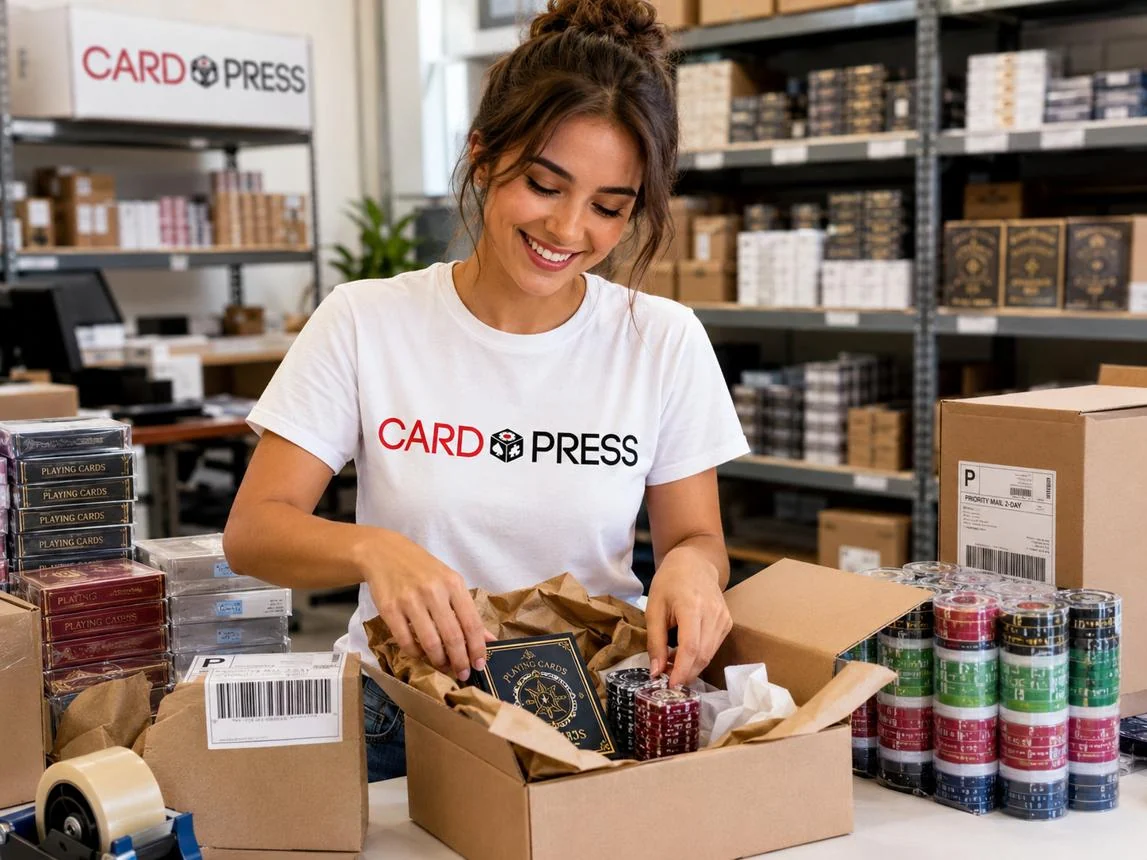
Using two shipping routes creates two sets of milestones to follow. The team shared shipment and tracking updates when they became available and communicated changes to carrier or schedule information.
For buyers, useful updates distinguish dispatch, arrival at a port or warehouse, and final delivery. These are separate stages. Clear communication helps the purchasing team plan stock availability without treating an intermediate milestone as receipt of the goods.
What buyers can take from this order
Set the early quantity before choosing the shipping split
Start with the number of decks needed for the first event, launch or replenishment period. Then compare that requirement with the expected timing and cost of each route. Order value, inventory capacity and the delivery deadline can all change the appropriate allocation.
Compare the complete delivery scope
Compare quotations on the same basis: freight, clearance, applicable duties and taxes, handling and final delivery. Ask which charges are included and which remain outside the quotation. A lower freight figure alone does not establish the lowest total delivered cost.
Finalize the deck and packaging specification early
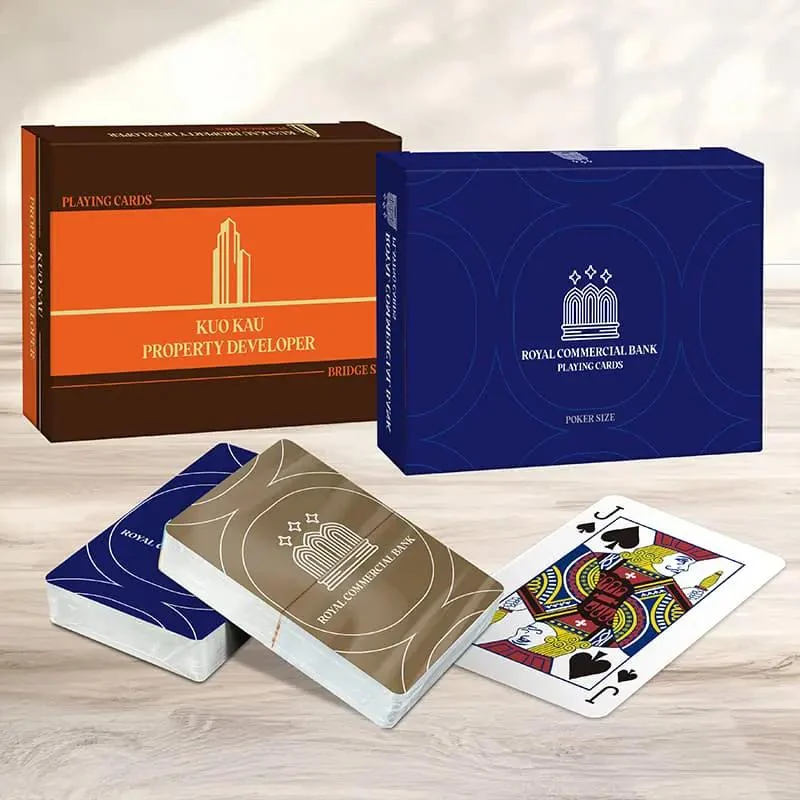
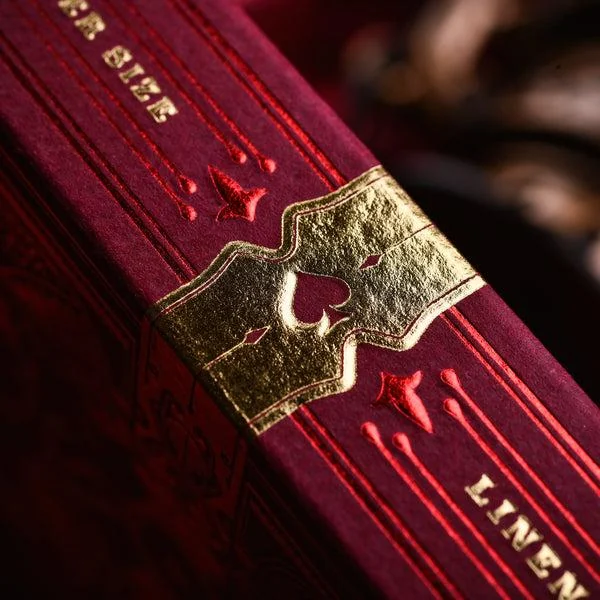
Card material, dimensions, deck composition and packaging all need to be agreed before production and shipment planning. Start with the available custom playing card options, then review artwork, printing and packaging customization.
For a marketing campaign, promotional playing cards with custom branding may require coordinated box artwork, extra cards or different quantities per design. Include those details when requesting a quote so they can be considered in the production and packing plan.
Planning your own custom playing card order
This Canada project shows how one 10,000-deck order was divided to address earlier stock availability and freight expenditure. The same ratio will not suit every buyer: a useful proposal starts with the deck specification, quantity, delivery location and actual deadline.
To discuss a bulk order, send your card size and material, artwork requirements, cards per deck, packaging, total quantity and destination. If only part of the order is urgent, specify that quantity and its required delivery date separately.
Request a custom playing card quotation so the production and delivery options can be reviewed together.
TAKE THE NEXT STEP
Build your project brief.
Bring together the deck specification, packaging, order quantity and delivery requirements.
Discuss your card project